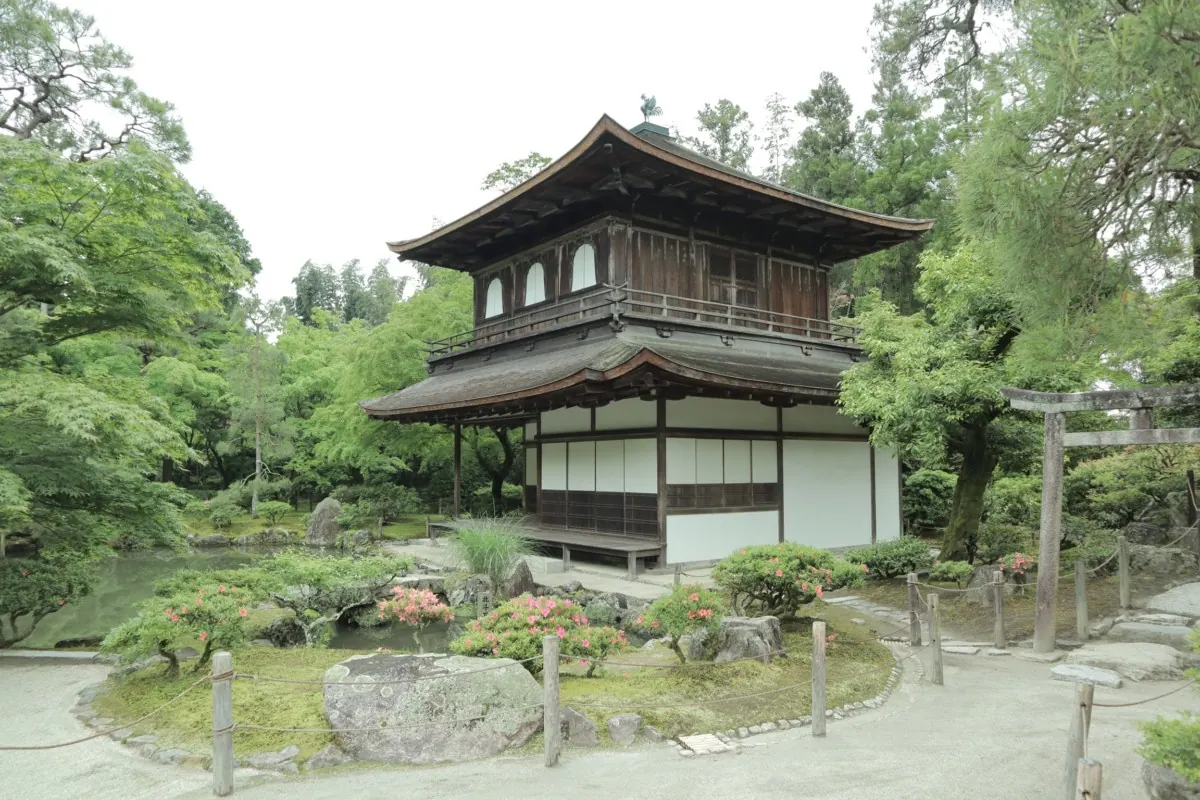
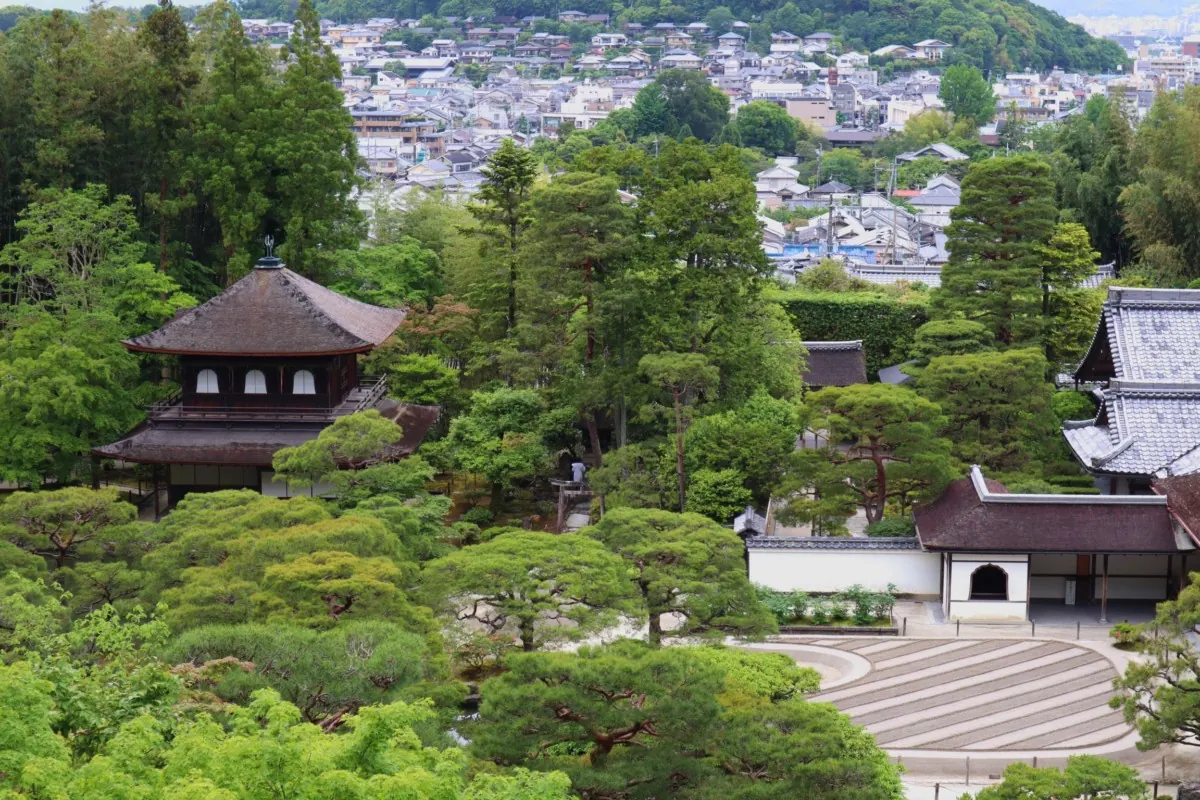
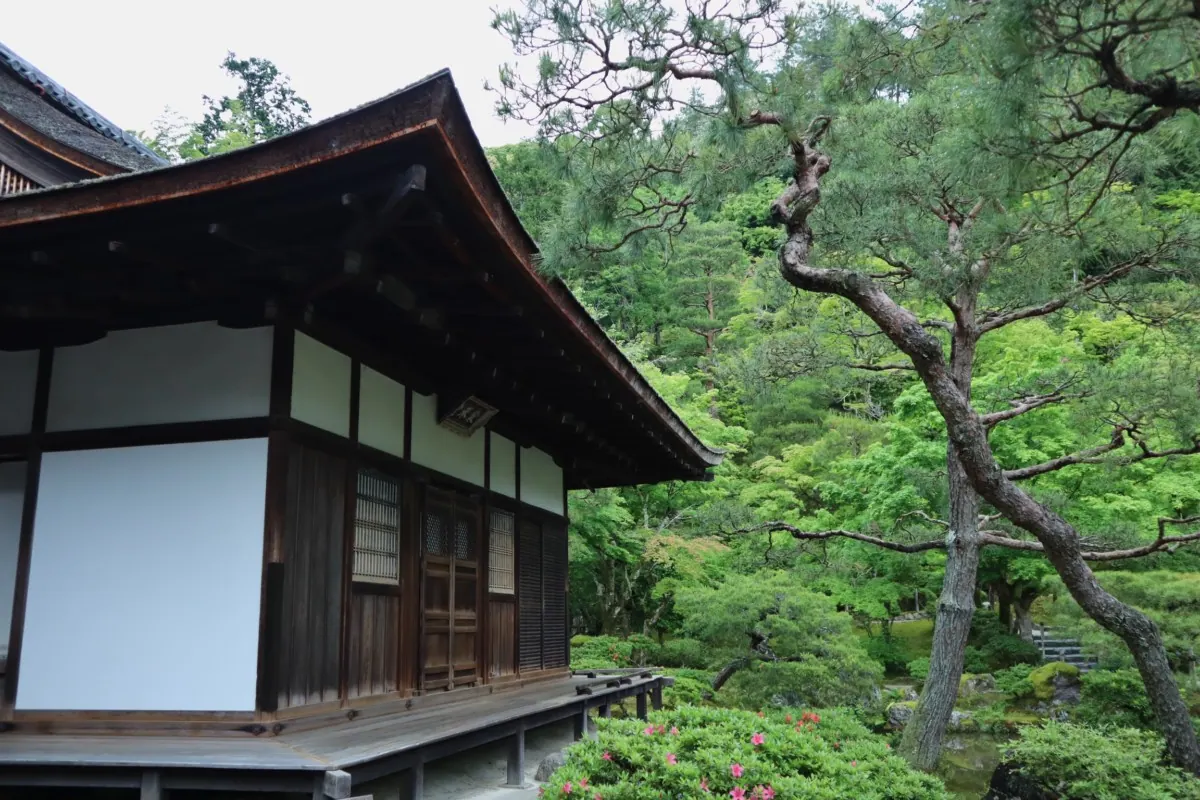
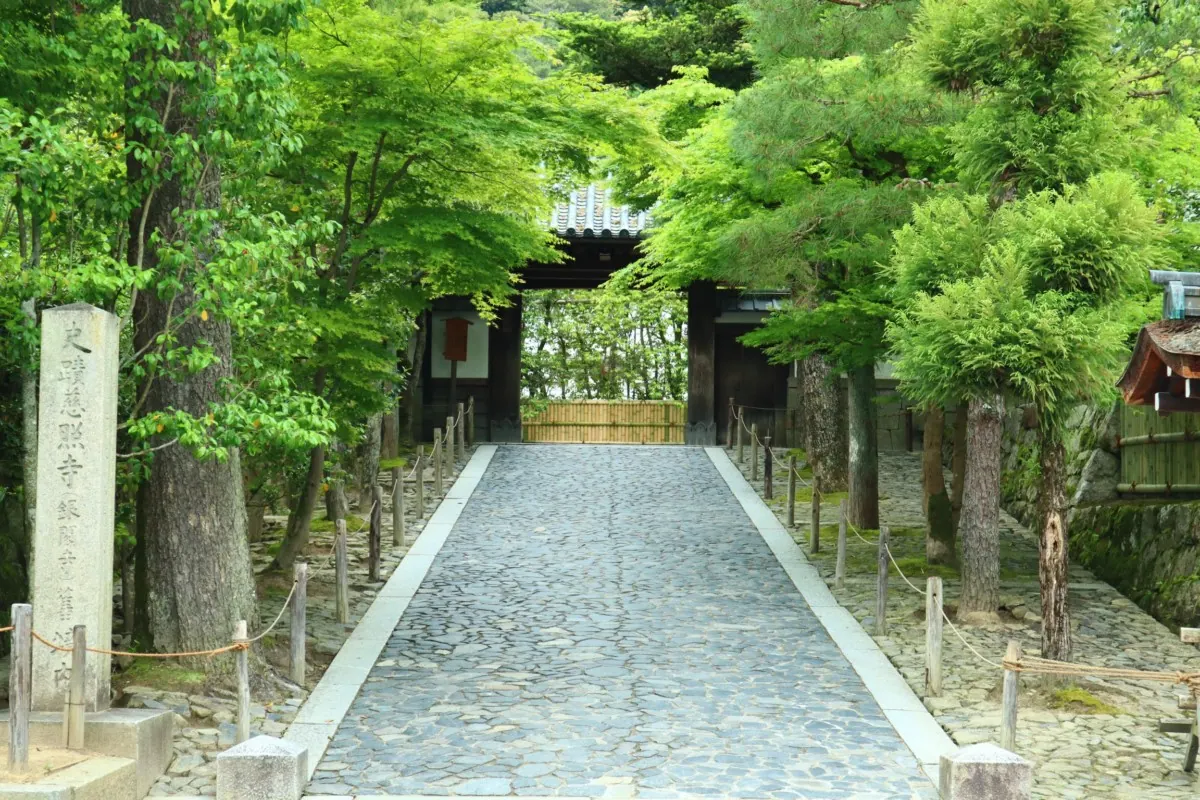
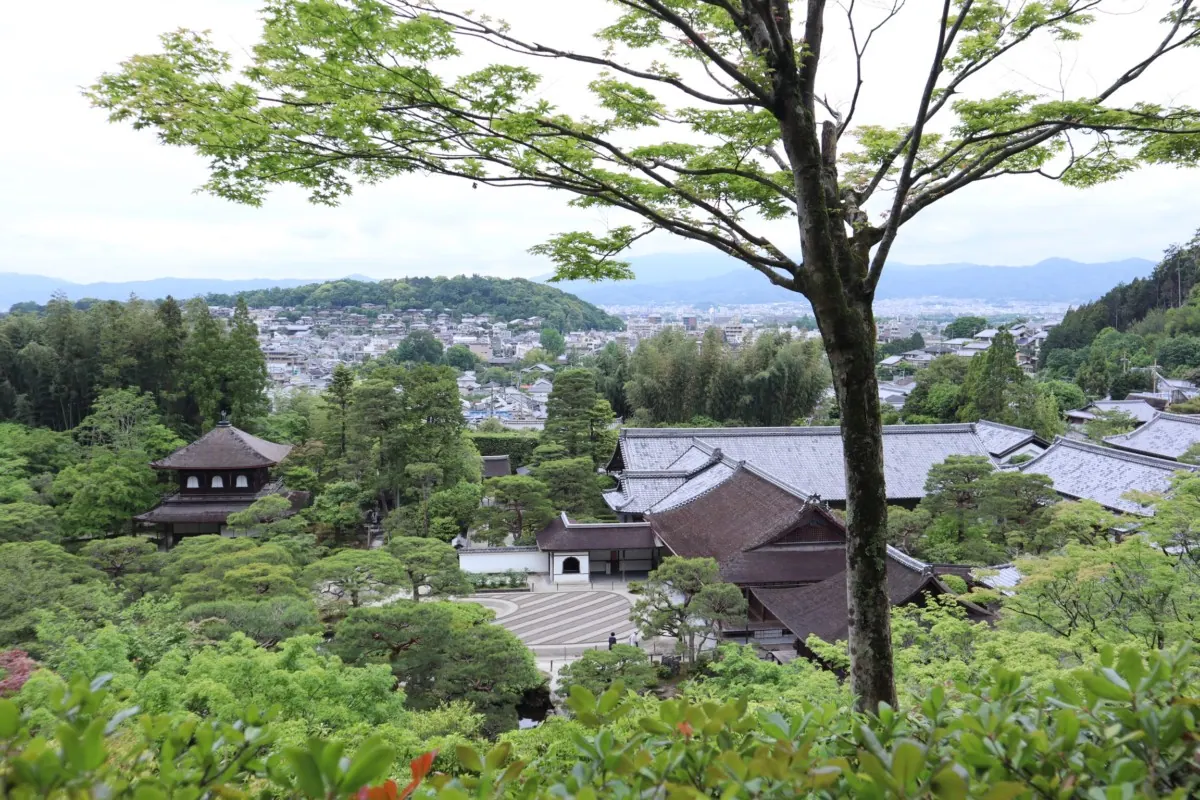
Ginkaku-ji is known as a symbol of Higashiyama culture; its official name is Jisho-ji. It was a mountain villa opened by Ashikaga Yoshimasa in 1482, and it is said that many forms of culture grew from here. In 1994 it was registered as a UNESCO World Cultural Heritage site as part of the “Historic Monuments of Ancient Kyoto”. The Ginkaku (Silver Pavilion), whose framework was raised in 1489, is a two-story building with a pyramid-shaped roof. The upper floor is called Choon-kaku and the lower floor Shinku-den.
Inside the Togudo hall, north of the garden, is the Dojinsai, the prototype of the four-and-a-half-mat tea room. The Buddha hall enshrines a statue of Amida Buddha and a statue of Yoshimasa.
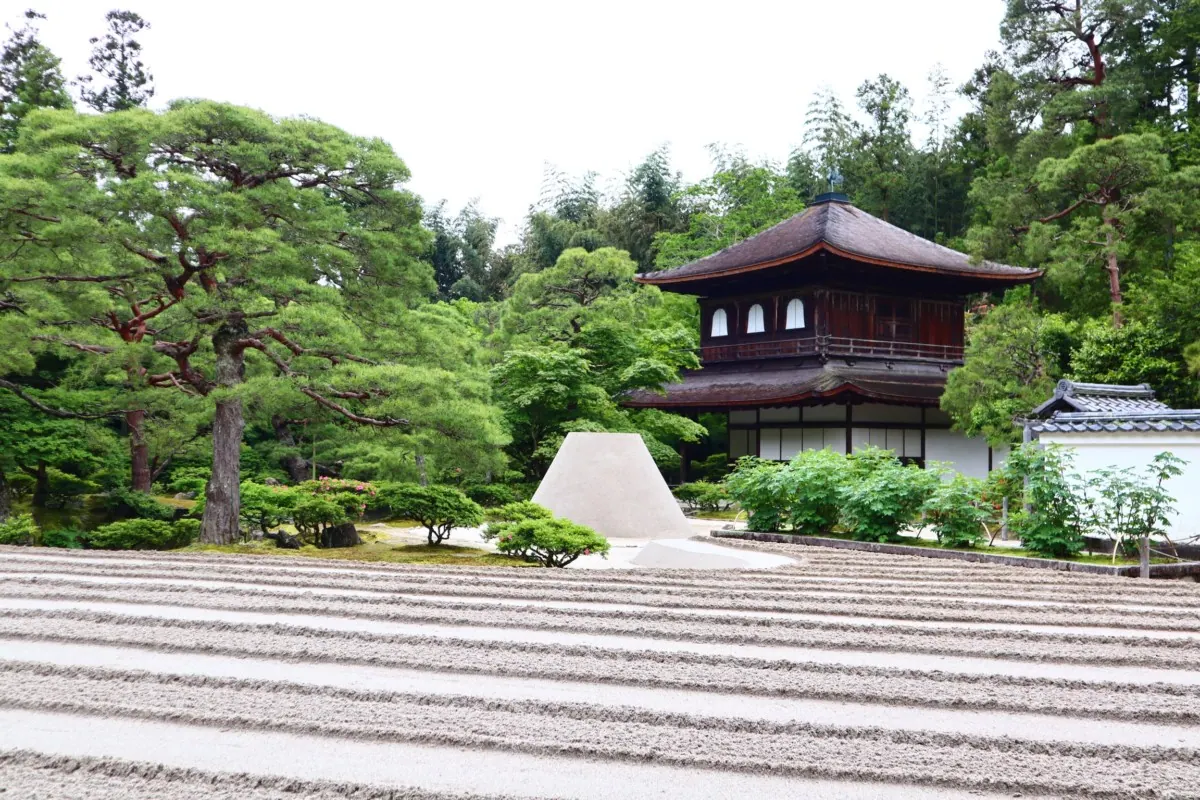
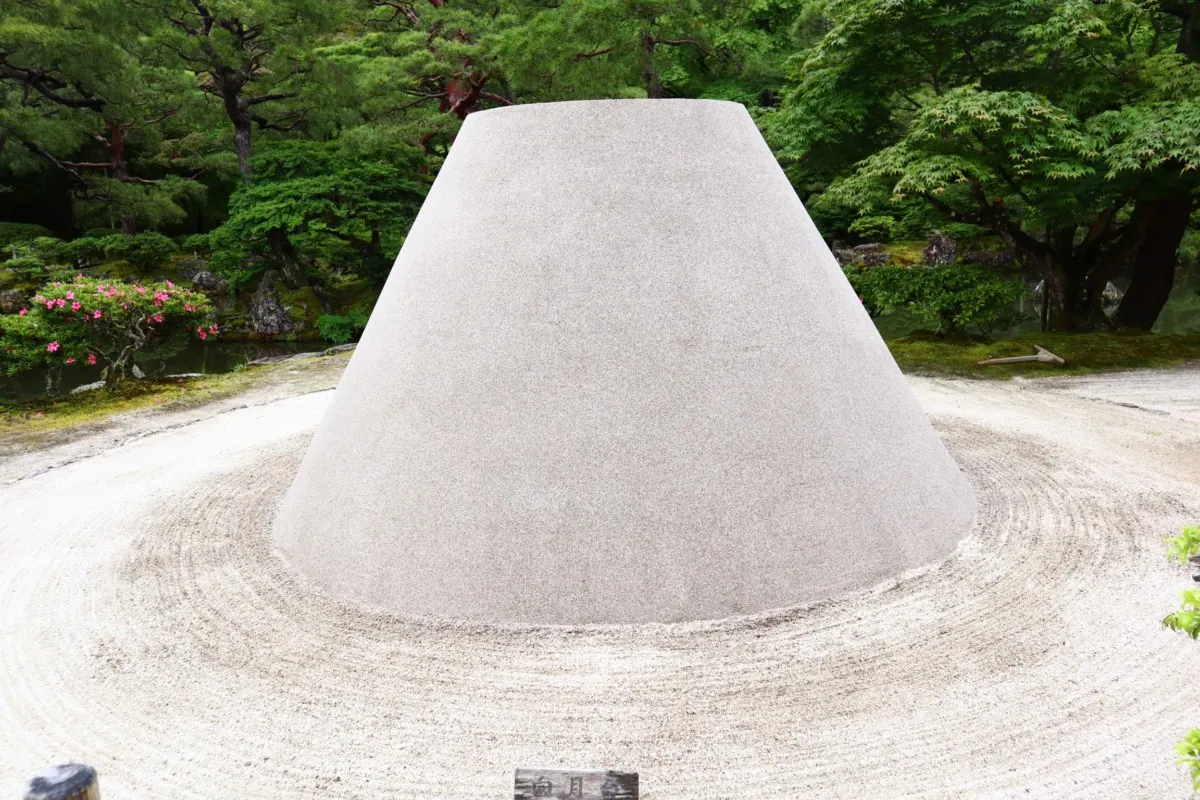
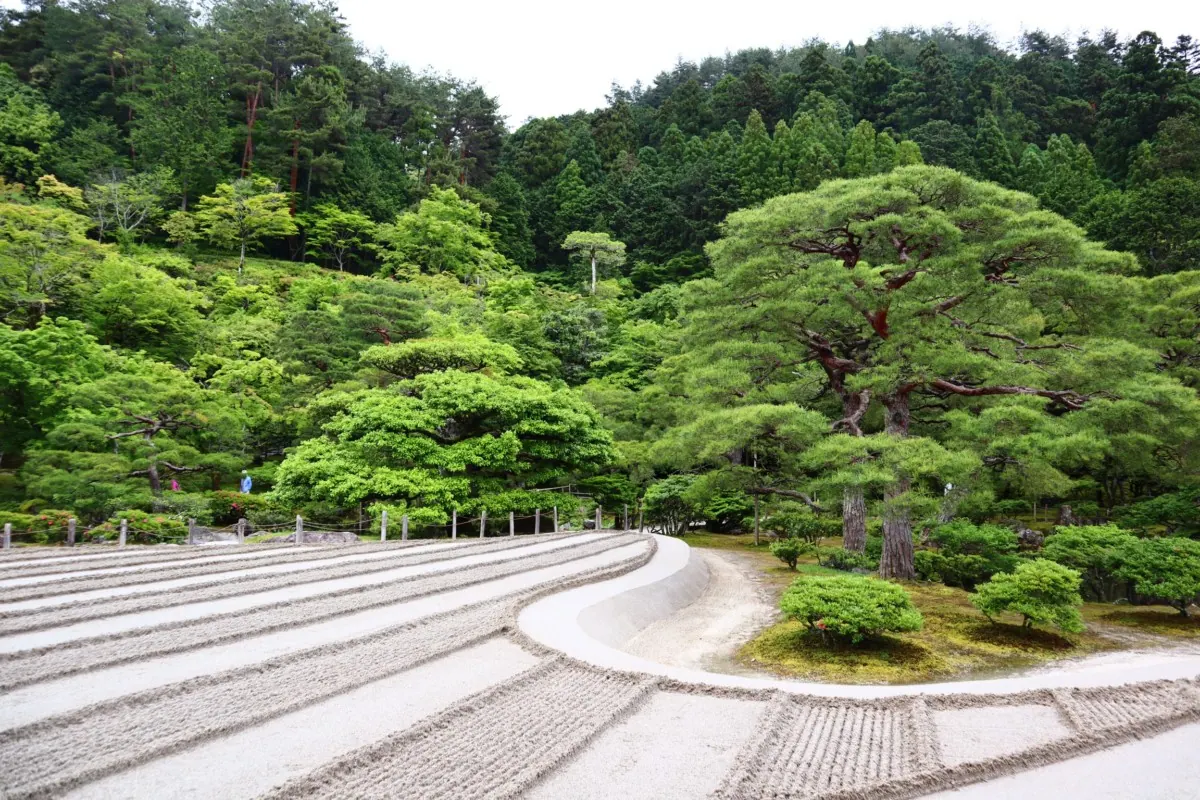
In the garden, completed in the early Edo period, the Kogetsudai — a mound of white sand built up in tiers — and the neatly raked Ginshadan sand garden reflect the moonlight and illuminate the Silver Pavilion.
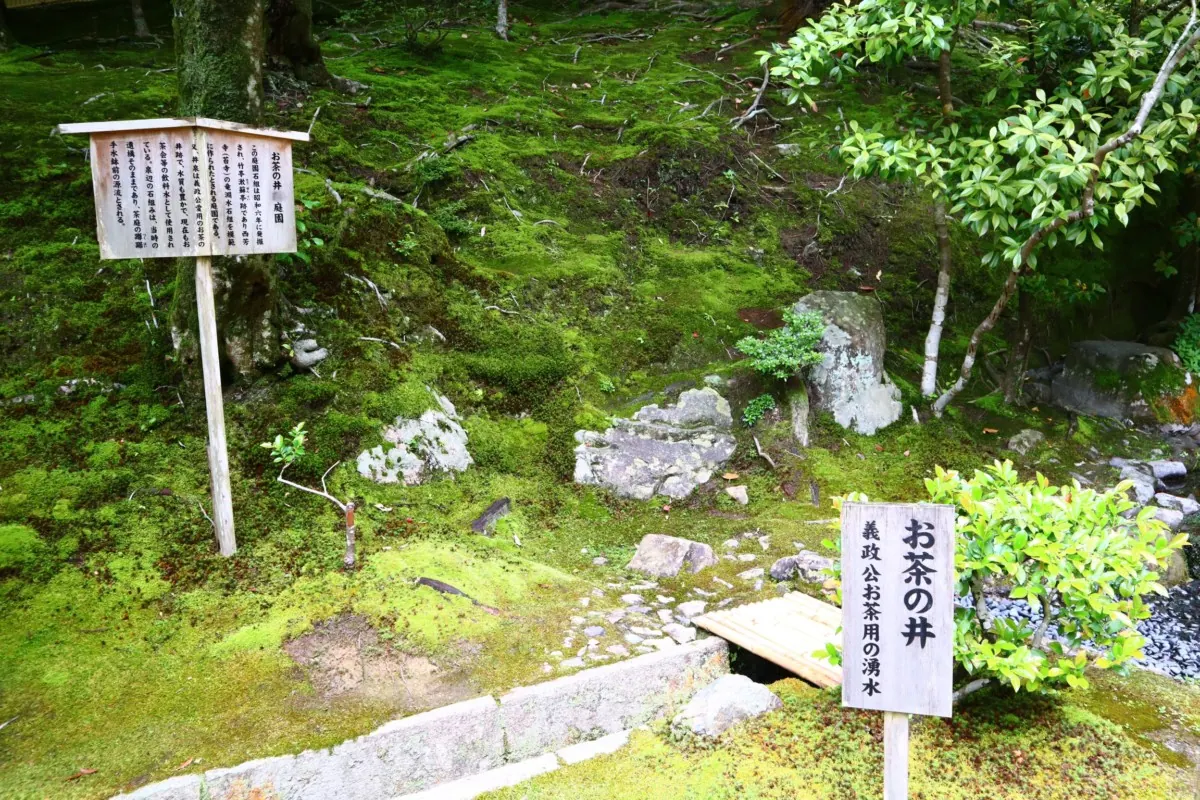
Ochanoi well
This is the site of the well Yoshimasa used for tea. The stonework is unchanged since his time, and the water is still of good quality and used as drinking water today.
Information
- Ginkaku-ji (Jisho-ji)
- Address: Ginkakuji-cho, Sakyo-ku, Kyoto
- Phone: 075-771-5725
- Website: https://www.shokoku-ji.jp/ginkakuji/
- Information is as of the original Japanese article (2020). Please check the official website for the latest details before visiting.
Reporting: 山下大輔 / Text: EeNa editorial team